Soprano
Jianyu SONG
APD (Royal Birmingham Conservatoire)
Artiste Diplôme, MMus in Chamber Music & MMus in Vocal Performance (ENMP)
Master’s in Vocal Performance (CRR de Paris)
MA & BA in Music Education (Southwest University, China)
Associate Artist at Birmingham Opera Company
I. Academic Background & Artistic Training
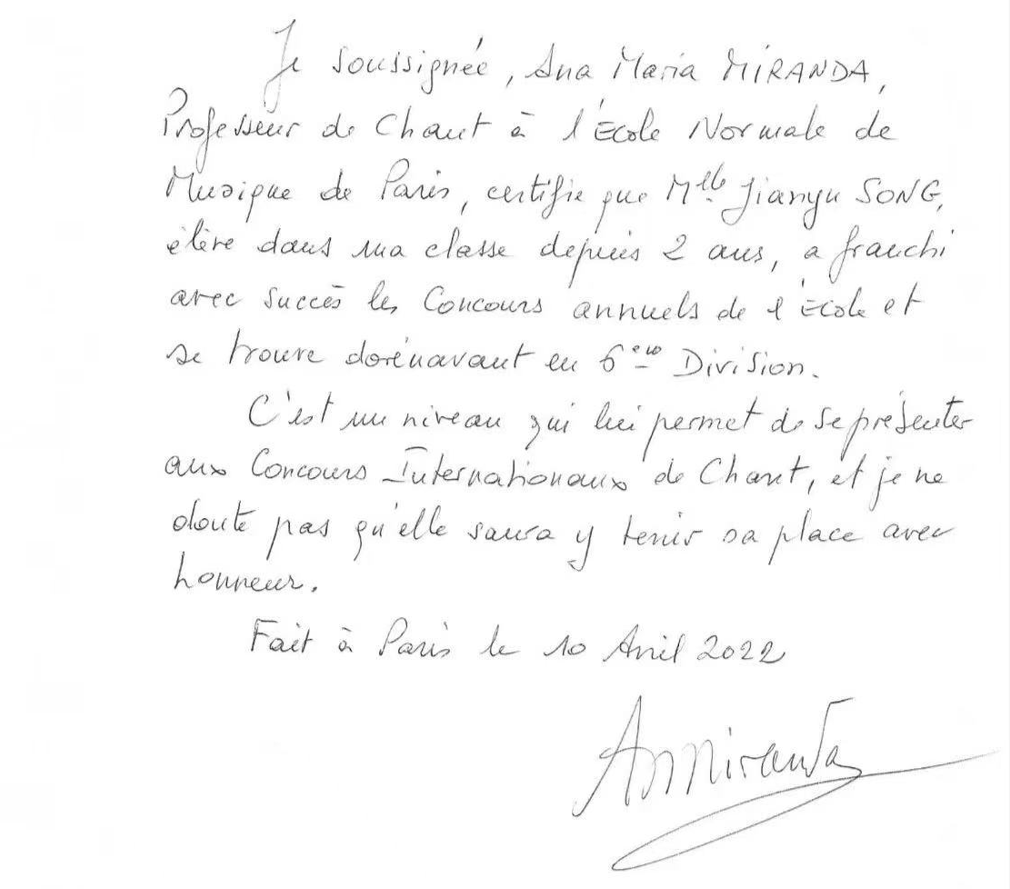
Jianyu Song is an accomplished Europe-based soprano who holds a dual-doctoral level of education from the Royal Birmingham Conservatoire (UK) and the École Normale de Musique de Paris (France). Her extensive academic credentials also include a Master of Music in Chamber Music, a Master's in Vocal Performance from the École Normale de Musique de Paris, and a Master's in Vocal Performance from the Conservatoire à Rayonnement Régional de Paris (CRR).
Her artistic journey began at age eight with the violin, later leading to her undergraduate and postgraduate studies in Music Education at Southwestern University (China). Upon moving to France, she continued her advanced training under renowned sopranos Ana Maria Miranda, Sylvie Sullé, and Elsa Maurus.
After obtaining the Artiste Diplôme (the highest European performance diploma) in France, she was admitted to the Advanced Postgraduate Diploma (APD) program at the Royal Birmingham Conservatoire, where she currently studies with the celebrated baritone Jonathan Gunthorpe (Royal Opera House, La Scala). Her training spans both Chinese and European educational systems, resulting in a unique artistic path characterized by academic rigor, exceptional linguistic sensitivity, and cross-cultural expressive power.
II. Stage Performance & Professional Achievements
As a rising star on the international stage, Jianyu Song has been a featured soloist in Handel's Messiah (Soprano Soloist), a collaboration between the Hector Berlioz Conservatoire and Paris City Hall (Hôtel de Ville). She has also performed Beethoven's Symphony No. 9 at the National Taiwan Grand Theatre.
Her operatic repertoire is diverse and prestigious. In 2025, she will perform the role of Musetta in Puccini's La Bohème with the Welsh National Opera (WNO). Other notable roles include Eurydice in Offenbach's Orphée aux Enfers at the Royal Birmingham Conservatoire and Pamina in Mozart's Die Zauberflöte in Paris. She is currently a contracted soprano at the Opéra d'Avignon in France.
Her accolades include:
- ● Finalist: 35th Concours International de Chant Marmande.
- ● 3rd Prize: 2022 Concours de Chant à Paris des Maîtres du Chant.
- ● 1st Prize: Vocal Group, 11th World Chinese Art Festival.
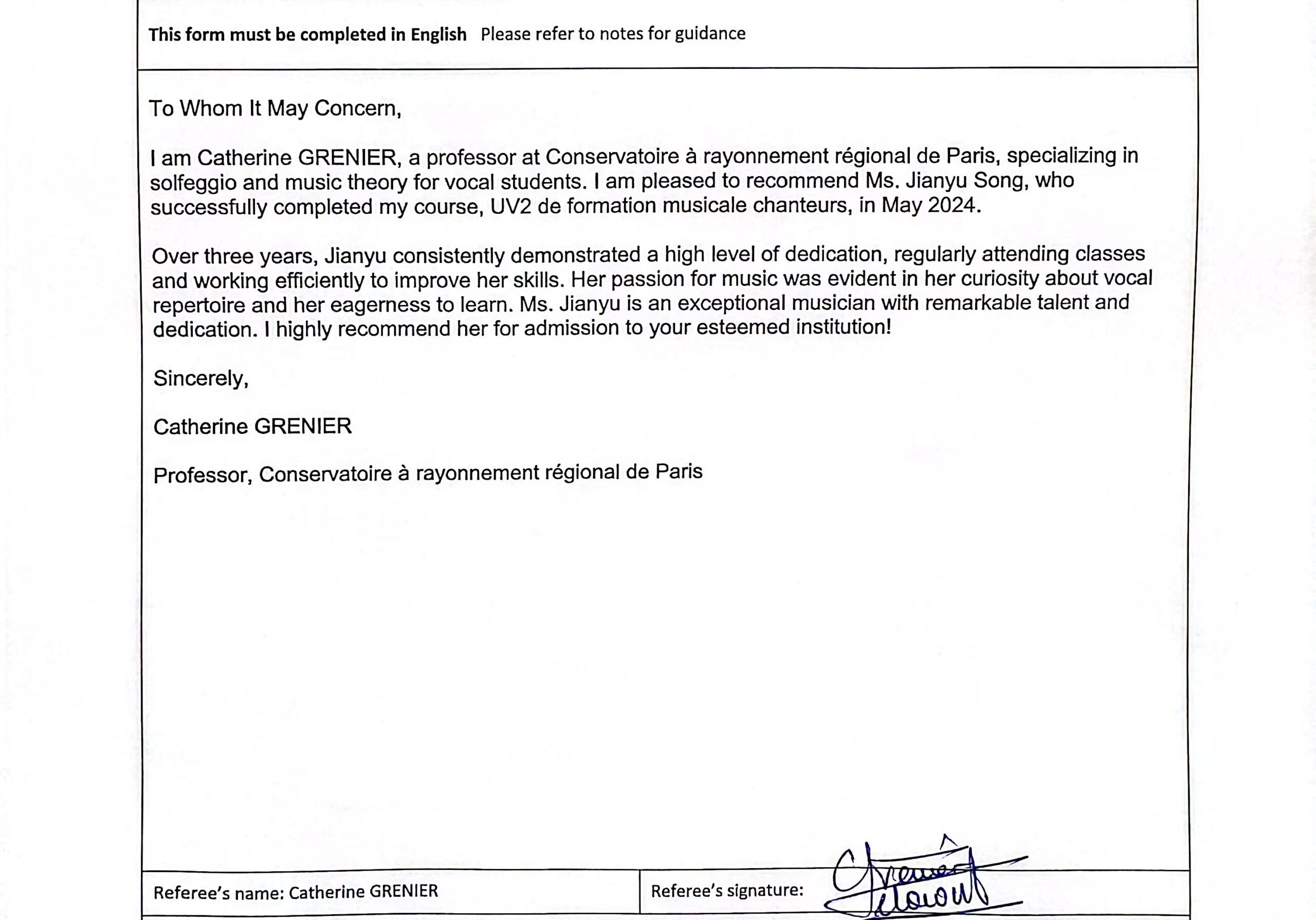
- ● Academic Excellence: Recipient of the National Scholarship (China) and top-score graduate of the Catherine Grenier Masterclass Training Camp.
She has participated in masterclasses with world-renowned artists such as Sabine Devieilhe, Benjamin Bernheim, Kitty Whately, and Maguelone Parigot (Paris Opera coach), receiving high critical acclaim for her performances.
III. Educational Contribution & Social Impact
Beyond her performance career, Jianyu Song is a dedicated educator. Between 2017 and 2020, she served as a full-time music teacher at Chongqing No. 1 Middle School, one of China's top secondary institutions. Her teaching excellence was recognized nationally when her demonstration courses were featured on the "Xuexi Qiangguo" (Learning Power) platform, China's primary state-level educational and media application.
Combining her profound academic insights with a rich international stage resume, Jianyu Song continues to promote vocal art and music education. She is committed to bridging cultural gaps through her voice, blending traditional discipline with modern international perspectives.
LÉO DELIBES (1836–1891)
Les filles de Cadix
Poem by Alfred de Musset
HENRI DUPARC (1848–1933)
Chanson Triste
Poem by Jean Lahor
CLAUDE DEBUSSY (1862–1918)
Apparition
Poem by Stéphane Mallarmé
Clair de lune
Poem by Paul Verlaine
Pierrot
Poem by Théodore de Banville
Romance
Poem by Paul Bourget
Paysage sentimental
Poem by Paul Bourget
Musique
Poem by Paul Bourget
C’est l’extase langoureuse (from Ariettes oubliées)
Poem by Paul Verlaine
Il pleut doucement sur la ville (from Ariettes oubliées)
Poem by Arthur Rimbaud
L’ombre des arbres (from Ariettes oubliées)
Poem by Paul Verlaine
ALBERT ROUSSEL (1869–1937)
A un Jeune Gentilhomme (Op. 12, No. 1)
Poem by H. P. Roché (after Herbert Giles)
Réponse d’une épouse sage (Op. 35, No. 2)
Poem by H. P. Roché (after Chang-Chi)
REYNALDO HAHN (1874–1947)
À Chloris
Poem by Théophile de Viau
DARIUS MILHAUD (1892–1974)
A une Fontaine (from Chansons de Ronsard)
Poem by Pierre de Ronsard
LOUIS BEYDTS (1895–1953)
Le petit serin en cage
Poem by Paul Fort
FRANZ SCHUBERT (1797–1828)
Geheimes (Op. 14, No. 2)
Poem by Johann Wolfgang von Goethe
Wanderers Nachtlied (Op. 96, No. 3)
Poem by Johann Wolfgang von Goethe
Rastlose Liebe (Op. 5, No. 1)
Poem by Johann Wolfgang von Goethe
An den Mond (Op. 57, No. 3)
Poem by L. H. Chr. Hölty
Nacht und Träume (D 827)
Poem by Matthäus von Collin
HUGO WOLF (1860–1903)
Er ist’s (from Mörike-Lieder)
Poem by Eduard Mörike
Das verlassene Mägdlein (from Mörike-Lieder)
Poem by Eduard Mörike
In dem Schatten meiner Locken (from Spanisches Liederbuch)
Poem by Paul Heyse
Klinge, klinge, mein Pandero (from Spanisches Liederbuch)
Poem by Emanuel Geibel
Ach, des Knaben Augen (from Spanisches Liederbuch)
Poem by Emanuel Geibel
RICHARD STRAUSS (1864–1949)
Freundliche Vision (Op. 48, No. 1)
Poem by Otto Julius Bierbaum
Kornblumen (Op. 22, No. 1)
Poem by Felix Dahn
GEORGE FRIDERIC HANDEL (1685–1759)
Tornami a vagheggiar (from Alcina) — Role: Morgana
Endless pleasure, endless love (from Semele) — Role: Semele
WOLFGANG AMADEUS MOZART (1756–1791)
Deh vieni, non tardar (from Le nozze di Figaro) — Role: Susanna
Zeffiretti lusinghieri (from Idomeneo) — Role: Ilia
Nel grave tormento (from Mitridate, re di Ponto) — Role: Aspasia
Ach, ich fühl’s (from Die Zauberflöte) — Role: Pamina
GIOACHINO ROSSINI (1792–1868)
Il mio ben quando verrà (from La scala di seta) — Role: Giulia
Vorrei spiegar il giubilo (from La cambiale di matrimonio) — Role: Fanni
GAETANO DONIZETTI (1797–1848)
Quel guardo il cavaliere (from Don Pasquale) — Role: Norina
O luce di quest’anima (from Linda di Chamounix) — Role: Linda
GIUSEPPE VERDI (1813–1901)
Caro nome (from Rigoletto) — Role: Gilda
Sul fil d’un soffio etesio (from Falstaff) — Role: Nannetta
CHARLES GOUNOD (1818–1893)
Ah! Je veux vivre (from Roméo et Juliette) — Role: Juliette
JACQUES OFFENBACH (1819–1880)
Elle a fui, la tourterelle (from Les Contes d’Hoffmann) — Role: Antonia
GUSTAVE CHARPENTIER (1860–1956)
Depuis le jour (from Louise) — Role: Louise
JOHANN SEBASTIAN BACH (1685–1750)
Blute nur, du liebes Herz (from St. Matthew Passion)
Aus Liebe will mein Heiland sterben (from St. Matthew Passion)
GEORGE FRIDERIC HANDEL (1685–1759)
Let the bright Seraphim (from Samson) — Role: Israelitish Woman
Rejoice greatly, O daughter of Zion (from Messiah)
I know that my Redeemer liveth (from Messiah)
WOLFGANG AMADEUS MOZART (1756–1791)
Exsultate, jubilate (K. 165)
- Exsultate, jubilate (Allegro)
- Tu virginum corona (Andante)
- Alleluia (Molto allegro)
This is a curated set of vocal chamber music works. While the overall duration is concise, these pieces are perfect for events such as lunchtime concerts—offering exquisite musical moments that are instantly captivating and capable of creating a vibrant, engaging atmosphere.
- 6 Deutsche Lieder, Op. 103 (1837)
Selections: I. Sei still mein Herz, II. Zwiegesang, IV. Wiegenlied
Composer: Louis Spohr (1784–1859)
Instrumentation: Voice, Clarinet and Piano - Viens! une flûte invisible soupire
Composer: André Caplet (1878–1925)
Instrumentation: Voice, Flute and Piano - Viens! une flûte invisible soupire
Composer: Camille Saint-Saëns (1835–1921)
Instrumentation: Voice, Flute and Piano - “Bolero”
From: La fête du village voisin
Composer: François-Adrien Boieldieu (1775–1834)
Instrumentation: Voice and Piano - “Contemporary Bestiary”
Composer: Matthew Mancillas (b. 1990)
Instrumentation: Soprano, Flute, Clarinet and Piano
JOHANN SEBASTIAN BACH (1685–1750)
Weichet nur, betrübte Schatten (from Wedding Cantata, BWV 202)
Die Seele ruht in Jesu Händen (from Cantata BWV 127)
Phoebus eilt mit schnellen Pferden (from Wedding Cantata, BWV 202)
Videos
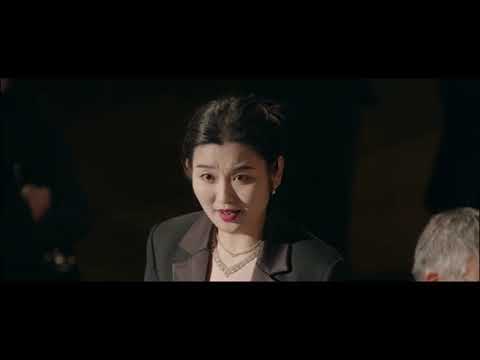
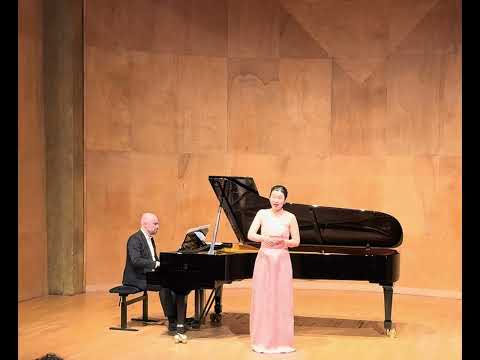
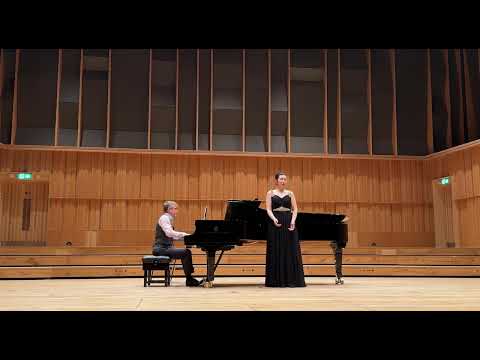
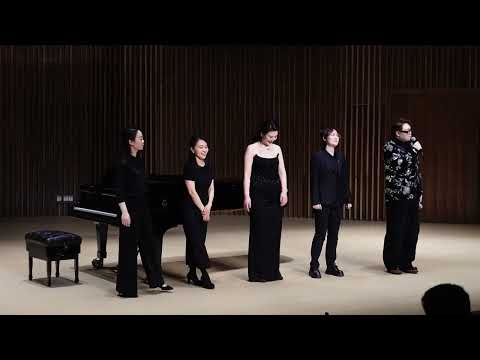
Cathay Concert Programme
This comprehensive evening recital is designed for a solo voice performance. The programme features a rich and diverse selection of works spanning six different languages (English, Latin, German, Italian, French, and Chinese), incorporating both piano and chamber music elements. It offers a substantial and sophisticated musical journey for a full-length concert.
First Half
- Let the Bright Seraphim
From Samson
Composer: G. F. Händel
Libretto: Newburgh Hamilton
- 165 “Alleluja”
Composer: W. A. Mozart
Text: Latin liturgical text - “Im Chambre séparée”
From Der Opernball
Composer: Richard Heuberger
Libretto: Victor Léon; Heinrich von Waldberg - “Vorrei spiegarvi il giubilo”
From La cambiale di matrimonio
Composer: G. Rossini
Libretto: Gaetano Rossi - Das Rosenband, Op. 36, No. 1
Composer: R. Strauss
Poet: Friedrich Gottlieb Klopstock - Die Nacht, Op. 10, No. 3
Composer: R. Strauss
Poet: Hermann von Gilm - Ständchen, Op. 17, No. 2
Composer: R. Strauss
Poet: Adolf Friedrich von Schack
*** Intermission ***
Second Half
- Clair de lune
Composer: C. Debussy
Poet: Paul Verlaine
- Apparition, CD 57, L. 53
Composer: C. Debussy
Poet: Stéphane Mallarmé - Si mes vers avaient des ailes
Composer: Reynaldo Hahn
Poet: Victor Hugo - À Chloris
Composer: Reynaldo Hahn
Poet: Théophile de Viau - Viens! une flûte invisible soupire
Composer: André Caplet
Poet: Victor Hugo - Viens! une flûte invisible soupire
Composer: Camille Saint-Saëns
Poet: Victor Hugo - Me voilà seule dans la nuit
From Les Pêcheurs de perles
Composer: G. Bizet
Libretto: Eugène Cormon; Michel Carré - My Lover Gives Me Sunflowers
Composer: Ding Shande
Lyrics: Zou Difan - Homesickness
Composer: Huang Zi
Lyrics: Wei Hanzhang - Youth Dance
Source: Xinjiang Folk Song
Arrangement: Hu Tingjiang
Accompaniment: Hu Yanjiang
Vocal Chamber Music Programme
This is a curated set of vocal chamber music works. While the overall duration is concise, these pieces are perfect for events such as lunchtime concerts—offering exquisite musical moments that are instantly captivating and capable of creating a vibrant, engaging atmosphere.
- 6 Deutsche Lieder, Op. 103 (1837)
Selections: Nos. 1, 2, and 4
Composer: Louis Spohr
Instrumentation: Voice, Clarinet and Piano - Viens! une flûte invisible soupire
Composer: André Caplet
Instrumentation: Voice, Flute and Piano - Viens! une flûte invisible soupire
Composer: Camille Saint-Saëns
Instrumentation: Voice, Flute and Piano - “Bolero”
From La fête du village voisin
Composer: François-Adrien Boieldieu - “Contemporary Bestiary”
Composer: Matthew Mancillas
Instrumentation: Soprano, Flute, Clarinet and Piano